The background and history of dim sum
Dim sum is an ancient dining tradition from Southern China centered around small dishes, sharing, and the social nature of eating together. What is served in restaurants worldwide today once began as simple snacks in teahouses along trade routes.
The origin: teahouses and the Silk Road
Dim sum has its origins in the Cantonese region around Guangzhou. Travelers, traders, and laborers moving along the ancient trade routes stopped at teahouses to rest. Initially, only tea was served, as it was believed that tea aided digestion and provided energy.
Gradually, the custom of serving small snacks with tea emerged. These light dishes were intended to accompany the tea, not to replace a full meal. From this grew the concept of yum cha — literally “drinking tea” — where tea and small dishes together formed a social experience.
What does ‘dim sum’ mean?
The term “dim sum” literally means “touching the heart” or “a small snack that touches the heart.” The name refers to small portions intended to subtly surprise and please, rather than to be heavily filling.
Unlike a traditional multi-course menu, dim sum consists of several small dishes served simultaneously or in succession. The strength lies in the variety.
The Cantonese foundation
Although China possesses enormous culinary diversity, dim sum is strongly linked to Cantonese cuisine. This cuisine is known for its emphasis on freshness, balance, and subtle flavor. Ingredients are prepared in such a way that their natural character is preserved.
Many classic dim sum dishes come from this tradition:
- Steamed dumplings such as Ha Kau and Siu Mai.
- Steamed buns such as Char Siu Bao.
- Rice noodle rolls such as Cheung Fun.
- Savory rice dishes and light sweets.
Steaming is one of the most important preparation methods in dim sum. It ensures soft textures and preserves the pure flavor of ingredients.
Dim sum today: from global cities to Amsterdam
In the twenty-first century, dim sum has grown into a global phenomenon. What once began in teahouses in Southern China can now be found in major world cities from Hong Kong to London and from Vancouver to Amsterdam. In many cities, dim sum is a regular weekend tradition, where families and friends gather around a round table to share various dishes.
With the internationalization of Chinese cuisine, the context in which dim sum is eaten has also changed. While it was traditionally served mainly during lunch, it is now popular during both lunch and dinner. At the same time, the core remains unchanged: small dishes, freshly prepared, intended for sharing.
Dim sum in Amsterdam
Amsterdam has had a strong Chinese food culture for decades. With the arrival of Chinese restaurateurs in the second half of the twentieth century, dim sum also gained a permanent place in the city’s culinary landscape. While it was initially eaten mainly within the Chinese community, it slowly grew into a beloved dining style among a broader audience.
Today, dim sum enthusiasts in Amsterdam look not only for flavor but also for authenticity and craftsmanship. The quality of the dough, the freshness of the filling, and the traditional preparation method are decisive for the experience.
Sea Palace and the dim sum tradition
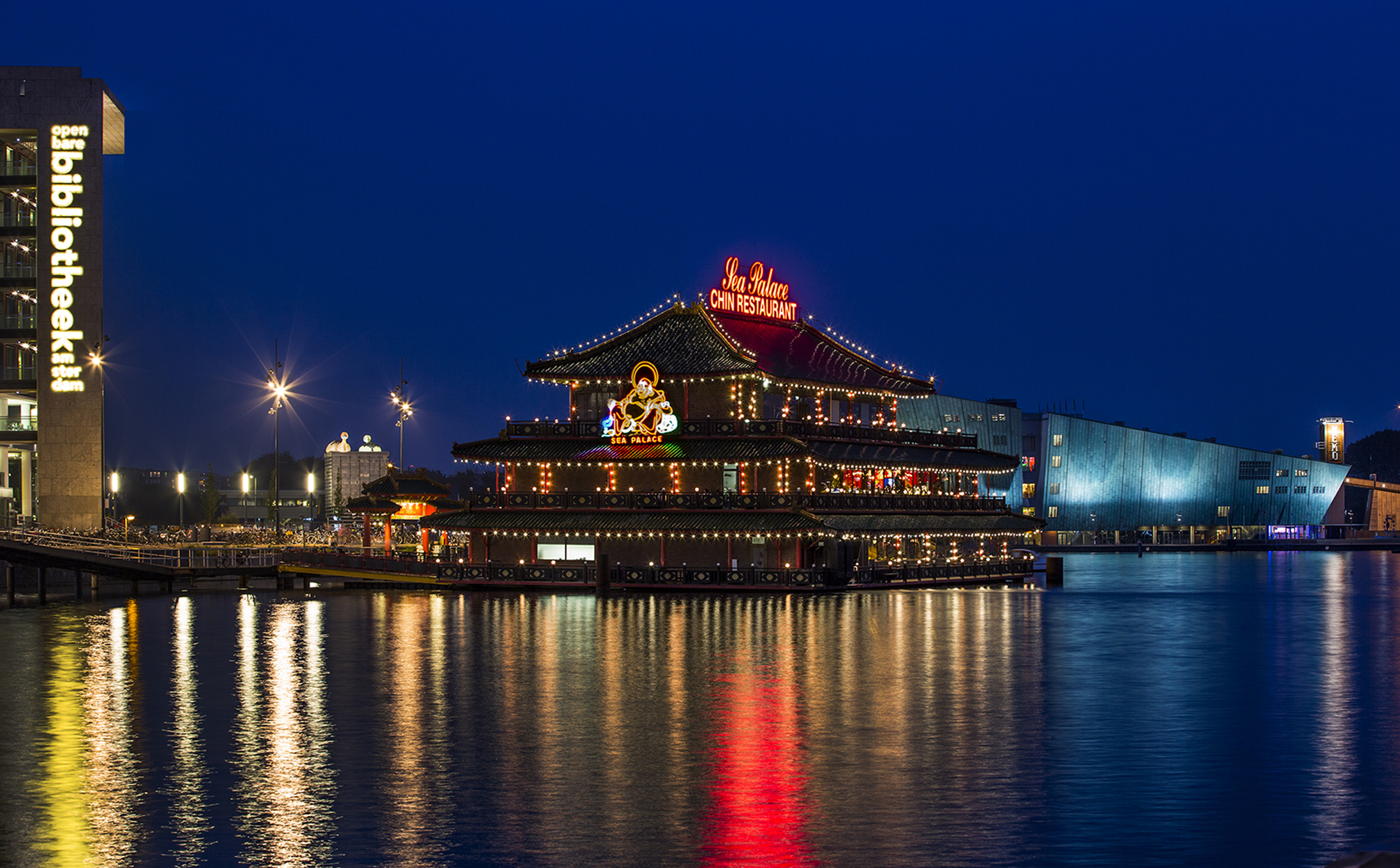
Within that Amsterdam dim sum culture, Sea Palace occupies a special position. As an iconic restaurant on the water at the IJ, specialized dim sum chefs have been working here for years, respecting and continuing the Cantonese tradition. The dishes are prepared fresh daily, with attention to texture, balance, and presentation.
Dim sum at Sea Palace thus aligns with the original idea of yum cha: coming together, sharing, and taking one’s time. In a city that is constantly in motion, dim sum offers a moment of tranquility at the table: exactly as it was intended centuries ago.
The dedication to traditional preparation and constant quality has not gone unnoticed. Since September 2024, Sea Palace has been awarded a Michelin Bib Gourmand. This distinction is awarded to restaurants where guests can enjoy exceptionally good food at a reasonable price. As Gwendal Poullennec, International Director of the Michelin Guides, describes it: “It is a coveted award for foodies looking for special and affordable dining experiences. An invitation to enjoy generous, convivial, and often unpretentious cuisine.”
Within the dim sum tradition, where craftsmanship, freshness, and balance are central, this recognition serves as a confirmation of the quality and continuity with which Sea Palace has operated for years.
Want to try dim sum?
Dim sum is more than a meal; it is a tradition of sharing, discovering, and enjoying together. In the heart of Amsterdam, Sea Palace invites you to experience this ancient food culture for yourself. From refined dumplings to classic specialties: our dim sum is prepared fresh daily by experienced chefs.
Reserve your table at Sea Palace today and enjoy authentic dim sum in a unique waterfront setting in Amsterdam.