The customs and traditions of dim sum
Dim sum is more than just a collection of small dishes. It is a social tradition with its own customs, etiquette, and rhythm. Those experiencing a dim sum lunch for the first time will quickly notice that it works differently than a classic multi-course menu. There is no fixed order and no individual plates per course; instead, a table full of small dishes is shared together.
What does yum cha mean?
A dim sum lunch is traditionally called yum cha, which literally means “drinking tea.” In Southern China, the custom arose of gathering in teahouses to drink tea and eat small snacks. The tea was central, while the dishes supported the experience.
A traditional dim sum lunch still begins with selecting a tea. Commonly used varieties include jasmine tea, oolong, or pu-erh. The tea is shared and regularly refilled.
How do you order dim sum?
During a dim sum lunch, several small dishes are ordered to share. In traditional restaurants in Hong Kong, carts with steamed baskets sometimes still circulate past the tables, from which guests can choose directly. In other restaurants, orders are placed via a menu.
It is important to note that dim sum is not ordered per person, but per table. Everyone takes small portions of different dishes. This creates variety and allows everyone to taste multiple flavors.
A typical table includes:
- Steamed dumplings such as Ha Kau or Siu Mai.
- A bun such as Char Siu Bao.
- A rice noodle dish.
- A deep-fried specialty.
- Possibly a sweet dish to finish.
The order: no fixed rules
Dim sum has no strict order like a European dinner. Dishes often arrive as soon as they are ready. It is normal for a steamed dish and a deep-fried snack to appear on the table at the same time.
Nevertheless, there is a subtle rhythm:
- Lighter, steamed dishes first.
- Then more substantial or deep-fried items.
- Finishing with something sweet.
But this is not a fixed rule: sharing and variety are central.
Table etiquette
Dim sum has a number of traditional customs:
Refilling tea
When someone refills your teacup, it is customary to tap the table gently with two fingers as a thank you. This gesture reportedly dates back to an imperial legend in which an emperor poured tea for his entourage incognito.
Shared use of chopsticks
Dishes are picked up with chopsticks or serving spoons. In formal settings, a separate serving spoon is often used for hygienic sharing.
Relaxed pace
A dim sum lunch is not a quick meal. It is customary to take your time, talk, and order multiple rounds.
When do you eat dim sum?
Traditionally, dim sum is mainly eaten during lunch, usually between late morning and early afternoon. In Hong Kong, it is a popular weekend activity for families. In many modern restaurants, dim sum is also served during dinner, but the social character remains the same.
Dim sum in Amsterdam
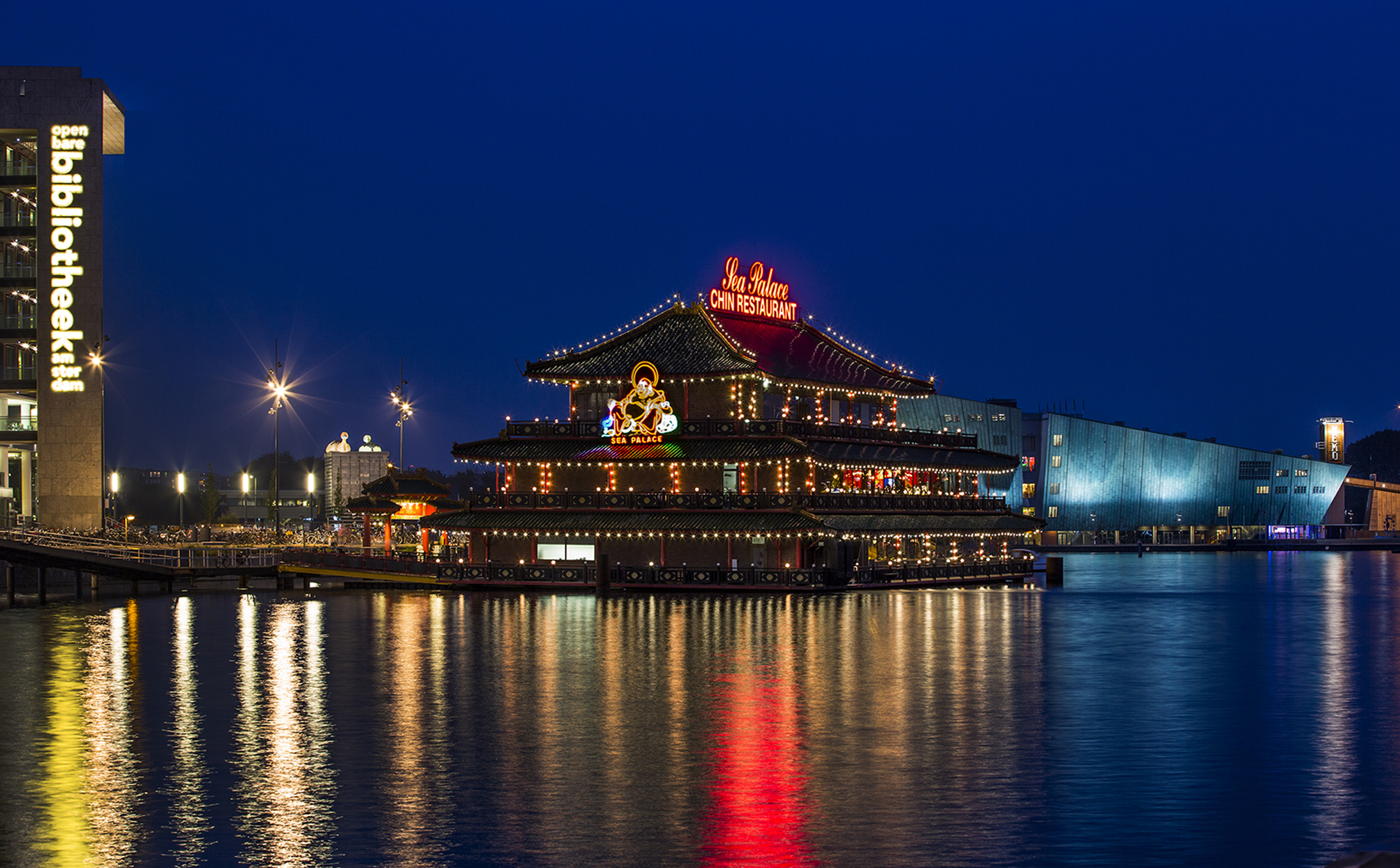
Excited about dim sum? In Amsterdam, dim sum has become a staple within the culinary world. At Sea Palace, we have been bringing the Cantonese dim sum tradition to life in the heart of the city for years. Our dim sum is prepared fresh daily by specialized chefs, with respect for classic preparation methods and attention to balance and refinement.
Whether you choose an extensive dim sum lunch on the weekend or an evening of shared dining with friends or family, at Sea Palace, enjoying together is central: exactly as dim sum is meant to be.